Imagine waking up, turning on your TV to catch the morning brief, and realising the voice you have trusted for years has been replaced by an algorithm. For the viewers of Bullet TV, this was not a scene from a science fiction film. It was the reality of a new era in Ghanaian broadcasting.

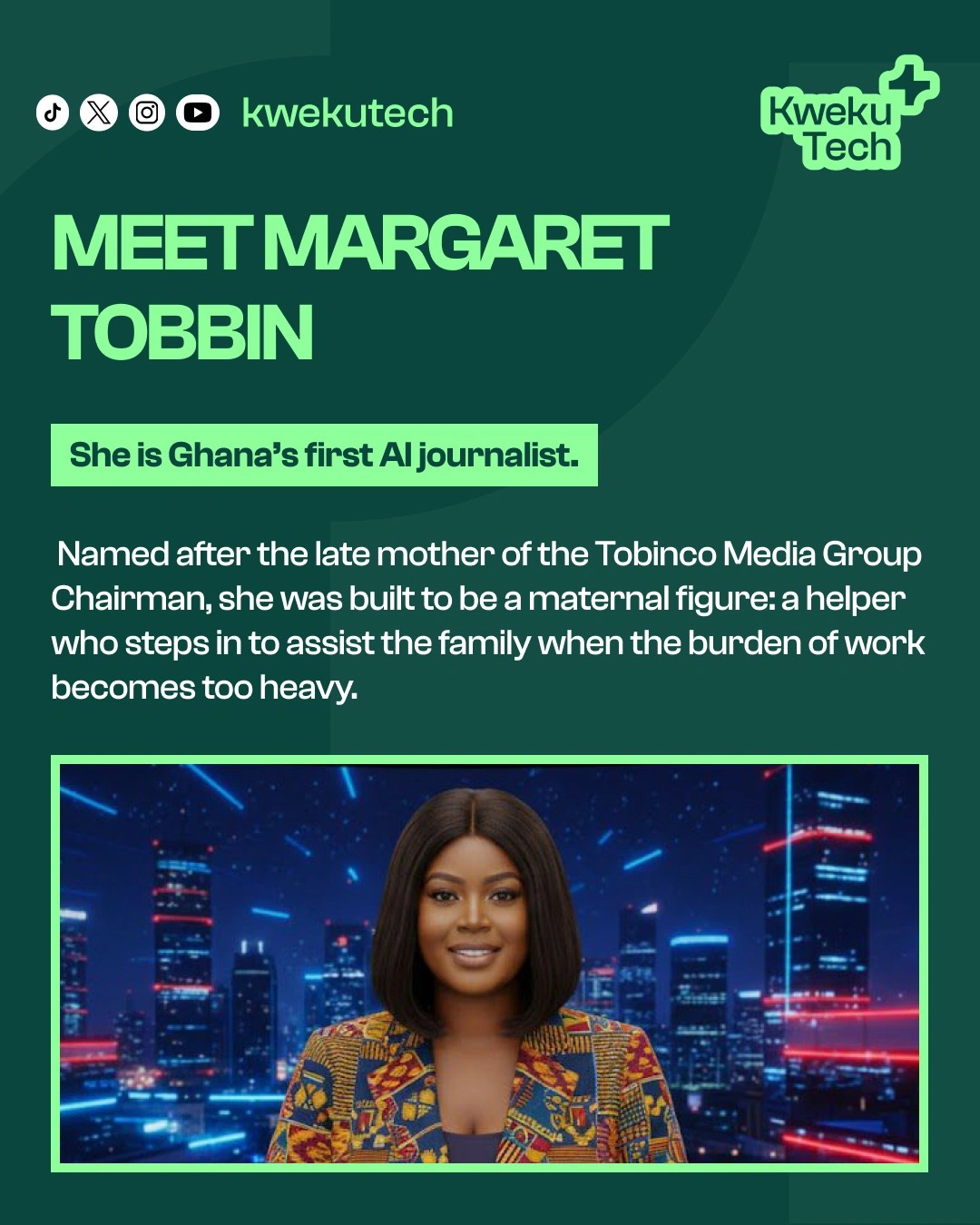
The arrival of Margaret Tobbin, Ghana’s first AI journalist, represents a significant milestone in the African media landscape. Introduced by the Tobinco Media Group, Margaret is more than just a technological feat; she is a tribute. Named after the late mother of the group’s Executive Chairman, her presence is built on the concept of a maternal figure stepping in to help the family when the burden becomes too heavy.
The station has been clear about her purpose. Margaret is not designed to be a job killer. She is positioned as a support system. Her primary task is to handle routine bulletins and minor updates, freeing up human journalists to focus on in depth reporting and investigative storytelling. Perhaps most importantly, she is there to ensure that human presenters, particularly women, can take their maternity leave and biological breaks without the fear of losing their seats on air.
It is a fascinating paradox. Bullet TV is using a machine to protect the most human parts of its employees' lives.
However, the transition has not been without friction. Viewers have pointed out that while Margaret has the data, she currently lacks the soul. Her struggle with the nuances of local Ghanaian pronunciations highlights a vital truth: the human touch remains the bedrock of authentic storytelling. You can code a voice, but you cannot yet code an identity.
Drop your thoughts on Margaret Tobbin and the future of the Ghanaian newsroom in the comments.