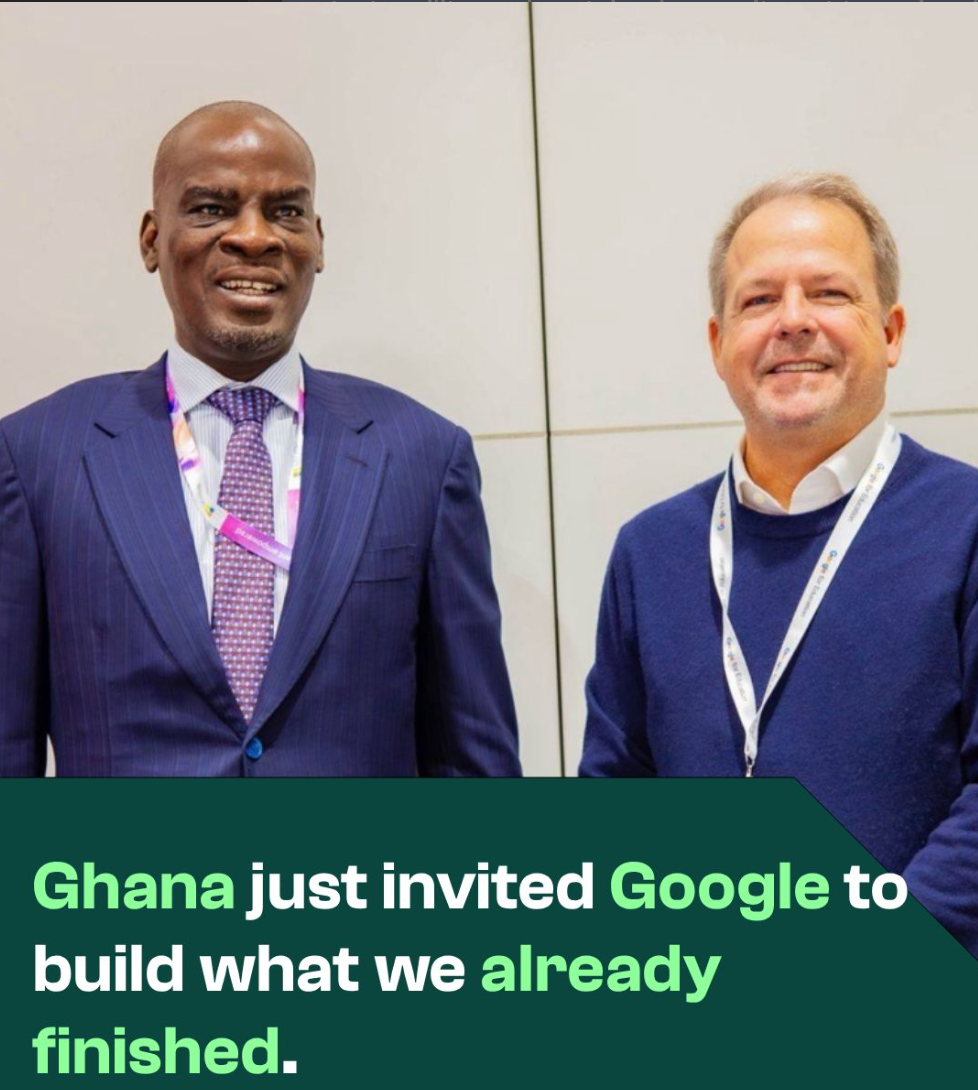
 When Government Innovation Plans Bypass Local Solutions 🇬🇭🤖
Over the weekend, Ghana's Minister of Education announced a partnership with Google, the University of Ghana, and GDI Hub to develop AI tools for local Ghanaian languages (Twi, Ewe, Dagbani).
The goal? Making education more accessible through technology that understands our languages.
On paper, this sounds like progress. In practice, it sparked one of the most important conversations the ecosystem has had this year.
Here's why: Khaya AI, an award-winning Ghanaian-built solution, already provides these exact capabilities. Founded by Dr. Paul Azunre (MIT PhD, former DARPA researcher), Khaya AI supports Twi, Ga, Ewe, and Dagbani.
The platform has been recognized internationally, works at scale, and was built specifically to solve this problem.
The tech community's question was simple: why orchestrate a new partnership when a proven local solution already exists?
This isn't about one company versus another. This is about the intentionality behind building digital infrastructure.
When governments partner with global platforms while bypassing local innovators who have already done the work, we risk two critical outcomes:
Ecosystem confidence erosion. Startups need proof that local solutions get a fair shot at public-private opportunities. Without this, talent migrates, and local capacity atrophies.
Dependency over sovereignty. Building local digital infrastructure means ensuring that the tools powering our education, healthcare, and governance are owned, maintained, and understood locally. External partnerships are valuable, but they should complement (not replace) indigenous innovation.
The encouraging update: Investigative journalist MANASSEH AZURE AWUNI amplified the conversation, and the Minister has now expressed willingness to engage Khaya AI for possible collaboration. This is what accountability looks like, and it's a model for how ecosystem advocacy can drive better outcomes.
Three lessons for policymakers and ecosystem builders:
Audit before you build. Before launching new initiatives, map what local solutions already exist. The answers might surprise you.
Partner with intention. Global platforms bring scale, but local startups bring context, agility, and sustained commitment to regional challenges.
Celebrate public correction. The Minister's openness to reconsider is leadership. Ecosystems thrive when stakeholders listen, adapt, and course-correct transparently.
Ghana's AI future will be shaped by decisions like these. The question isn't whether we innovate, it's whether we do so in ways that build local capacity or offshore it.
HeaderCard skeleton