Most people remember their last day of university as a closing ceremony. For Alex Bram
@TheAlexBram, it was groundbreaking.
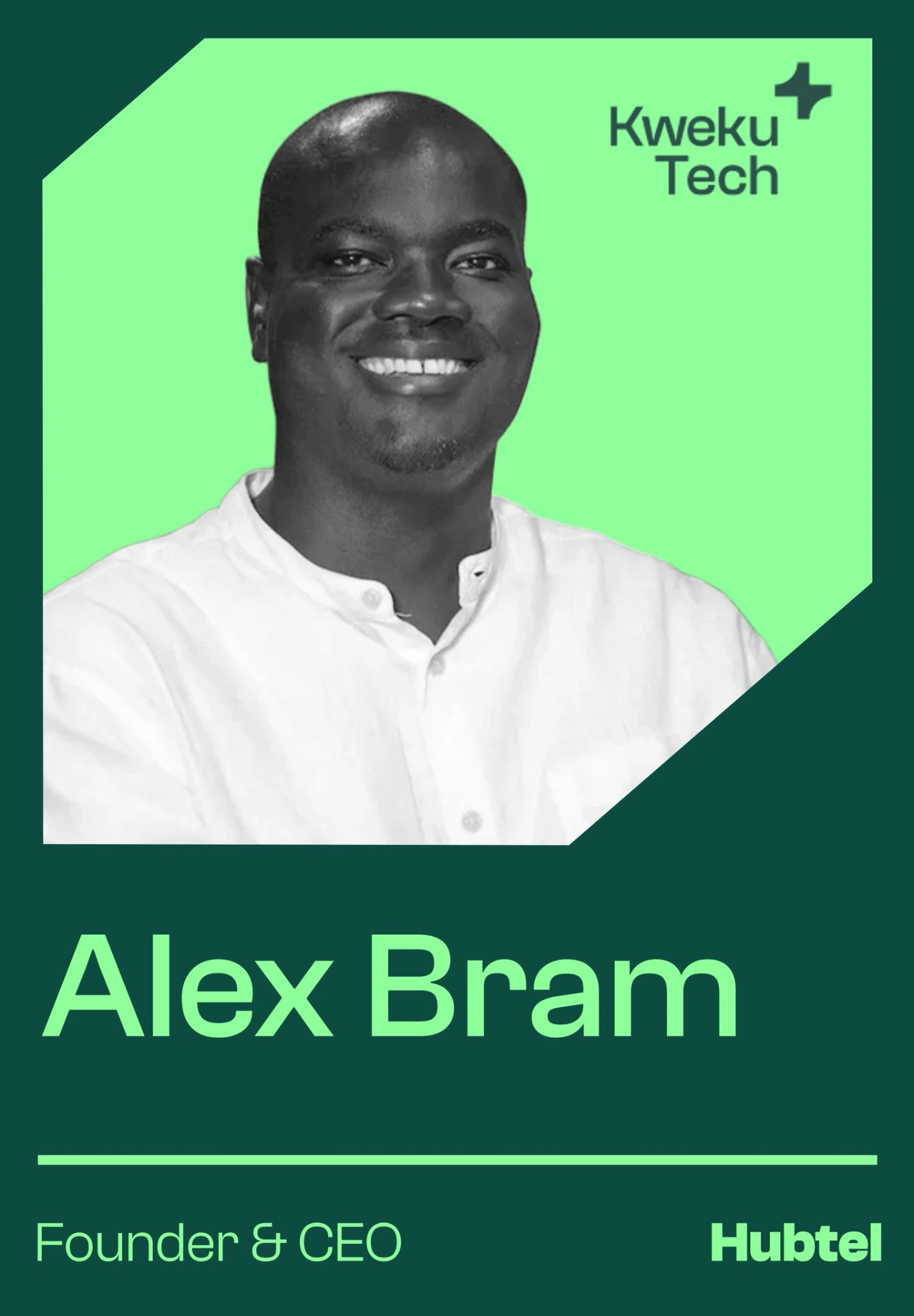
On May 12, 2005, while the rest of KNUST was exhaling the tension of four years of study, Alex was already calculating a different kind of yield. He held a BSc in Chemistry in one hand and a conviction that refused to wait for a permission slip from the world. That day, he co-founded what would become Hubtel.
There is a profound, poetic logic in a Chemist building the digital plumbing of a nation. Chemistry is not just about substances; it is about the discipline of controlled reactions. It is about understanding that if you get the conditions right and the bonds strong, transformation is inevitable.
Twenty years later, Hubtel is the ultimate proof of that hypothesis.
It began as SMSGH, a messaging solution birthed when Ghana’s mobile economy was still in its infancy. But Alex was not engineering for the present. He was building the pipes for a future he could see but others could only guess at. When the mobile money revolution arrived, Hubtel did not just "pivot" in the casual startup sense of the word. It underwent a molecular restructuring.
The messaging provider transformed into the primary engine of Ghanaian commerce. Today, Hubtel processes more than 12% of every successful mobile money transaction in the country. It is the invisible force moving the capital that moves the nation.
But the most staggering detail is not the volume; it is the autonomy. Hubtel is 100% self-funded.
In a global tech culture that has pathologically confused fundraising with success, Alex Bram is a radical outlier. He chose the harder, quieter path of reinvesting revenue over chasing venture capital. He traded the short-term dopamine of a "Series A" headline for the long-term power of absolute ownership.
730 employees. 23 offices. A dominant stake in quick commerce. All built without a single dollar of external equity.
When Alex sought out Stanford and Harvard, he was not collecting trophies for a wall. He was sharpening his instruments. Leadership, Strategy Execution, and Corporate Innovation were not academic pursuits; they were the tactical upgrades required to manage a company that had outgrown the "startup" label to become a national institution.
Alex Bram@TheAlexBram is proof that the most patient builders are the ones who eventually own the landscape. He did not chase the noise. He waited for the reaction to compound. He reminds us that the most valuable thing you can learn in an institution like KNUST is not the curriculum, but the character required to see a reaction through to its end.
The formula for greatness in the African tech ecosystem is not just capital plus code. It is conviction multiplied by time.